


info@lnclibattery.com
+86-151 5898 4395

From Electrode Sheets to Finished Products: A Complete Guide to Lithium-Ion Battery Manufacturing Processes
Introduction
The performance of lithium-ion batteries depends not only on raw materials but also on precision manufacturing processes. From electrode sheet preparation to cell assembly, and then to formation and grading, every process directly affects the battery's consistency, safety, and lifespan. Taking prismatic aluminum-case lithium-ion batteries and polymer lithium-ion batteries as examples, this article will comprehensively break down the entire manufacturing process of lithium-ion batteries.
1. Three Core Stages of Lithium Battery Manufacturing
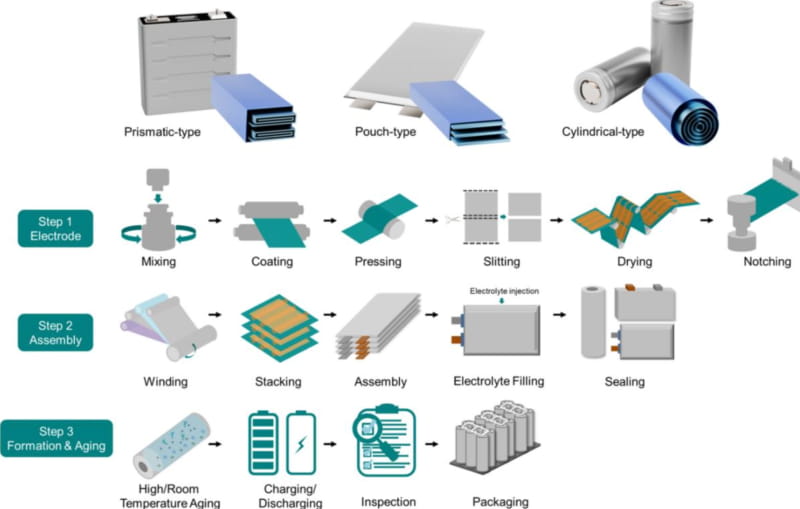
Lithium battery manufacturing is usually divided into three core stages: Front-End (Electrode Sheet Preparation), Middle-End (Cell Assembly), and Back-End (Formation & Sorting), each containing multiple precision processes.
2. Front-End Process: Electrode Sheet Preparation – The Foundation of Battery Performance
Electrode sheets are the core carriers of lithium-ion batteries. The core of the front-end process is to coat the cathode and anode active materials on the current collectors to produce qualified electrode sheets.
Slurry Mixing: Mix cathode/anode active powder materials, binders, conductive agents, and solvents in a certain ratio, and stir to form a uniform slurry.
Coating: Uniformly coat the slurry on aluminum foil (cathode) or copper foil (anode) current collectors, and remove the solvent through drying to form dry electrode sheets.
Calendering: Calender the dried electrode sheets to improve the compaction density, thereby enhancing the battery's energy density.
Slitting: Slit the large-sized electrode sheets into small electrode sheets of the designed size, and weld tabs to prepare for subsequent assembly.
3. Middle-End Process: Cell Assembly – The Formation of Battery Structure
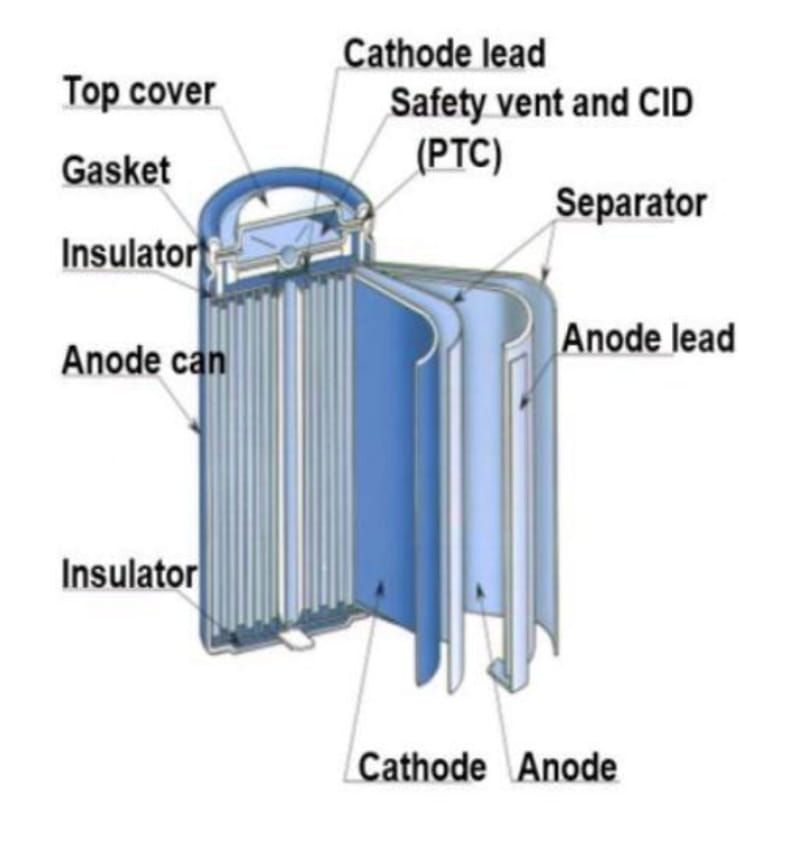
The core of the middle-end process is to assemble the cathode, anode, separator, and electrolyte into a complete cell.
Winding/Laminating: Wind (cylindrical/pouch batteries) or laminate (prismatic batteries) the cathode, anode, and separator together to form the main body of the cell.
Casing & Sealing: Place the cell into an aluminum case, steel case, or aluminum-plastic composite film pouch, and complete the initial sealing.
Electrolyte Injection: After drying the battery, inject a fixed amount of electrolyte to fully impregnate the cathode, anode, and separator.
4. Back-End Process: Formation & Sorting – Activation and Screening of Battery Performance
The back-end process is crucial for activating, screening, and aging battery performance, directly determining the factory quality of the battery.
Aging: Let the battery stand after electrolyte injection to fully impregnate the electrode sheets with the electrolyte and improve battery performance.
Formation: Perform the first charge on the battery to activate the cathode and anode materials, and form a Solid Electrolyte Interface (SEI) film on the anode surface. This is the core process for ensuring battery cycle life.
High-Temperature Aging: Store the battery at a certain temperature to accelerate internal side reactions and screen out early-failing products.
Capacity Grading & Sorting: Conduct charge-discharge tests on the battery, and classify the battery into different grades based on indicators such as capacity, internal resistance, voltage, and thickness to ensure the consistency of the battery pack.
Secondary Sealing/Final Inspection: Complete the final sealing, and conduct comprehensive inspections including appearance, electrical performance, and safety performance. Qualified products are packaged and delivered.
5. Core Differences Between Different Battery Manufacturing Processes
Prismatic Aluminum-Case Batteries: Adopt laminating technology, featuring high structural strength and good safety. They are the mainstream choice for NEV power batteries.
Cylindrical Batteries: Adopt winding technology, with high automation and low cost. They are mostly used in energy storage stations and two-wheelers.
Polymer Pouch Batteries: Use aluminum-plastic film packaging, with flexible shapes and high safety. They are widely used in 3C consumer electronics and wearable devices.
Conclusion
Lithium battery manufacturing is a sophisticated systematic project. From raw materials to finished products, every process requires strict process control. Understanding the manufacturing process not only helps you understand the core of battery quality but also provides a professional basis for battery selection and supply chain management.
Name: Teresa
Mobile:
Tel:+86-151 5898 4395
Whatsapp:008615158984395
Email:info@lnclibattery.com
Add:2313A18, Xinghe century #3069, Gangsha, Futian, Shenzhen, China.